


Focus on the Steel Industry
How HELU electrical connection technology beats the heat

The steel industry is home to some of the most difficult working conditions on the planet. Red-hot materials, temperatures in the hundreds of degrees Celsius, massive mechanical loads, dust, grime, and aggressive chemicals present enormous challenges for people and technology alike. At the same time, the industry is developing rapidly—more automation, digitalisation, and sustainability. To ensure that all processes continue to run safely and efficiently, connection solutions are required that are reliable, even in the face of these extreme conditions, and HELU cables, wires, drag chains, and assemblies make a significant impact.
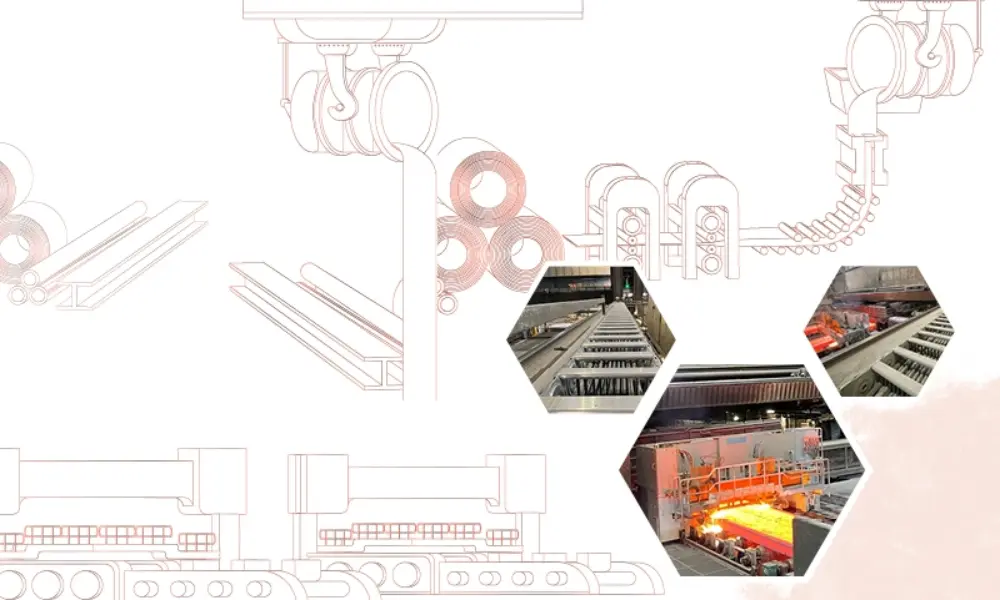
The steel production journey typically begins in blast furnaces where iron ore, coke, and different additives are turned into crude steel. This process is accompanied by extreme temperatures, and machines, such as tapping hole drilling machines or slag scrapers, are at work in critical heat zones. Next, as part of the continuous casting process, the liquid steel is processed into metre-long, massive plates or slabs. These are then rolled into sheets, bands, or coils in rolling mills. Rolling stands ensure that the material is continuously processed as part of a highly dynamic process with heavy weights and vibrations. Special coil transportation systems move and secure the rolls of steel sheets, which can weigh several tonnes. Forging presses and manipulators are also typical machinery used in the steel industry.
Extreme Conditions are Standard
"The production environments found in the steel industry are characterised by heat, slag, sparks, dust, and permanent mechanical loads," describes Karsten Göbel, Sales Manager Solutions at HELU. "Drag chains, cables, and hoses are subjected to extreme conditions in this industry, such as on blast furnace equipment, in steel plants, or in rolling mills.
Drag chains must cover long travel distances at times, be resistant to heavy soiling, and endure high speeds with stable rolling dynamics. Extreme temperature changes and corrosive elements should not present any issues." Requirements regarding material quality, construction, and protective mechanisms are appropriately high, as disruptions mean both difficult repairs and expensive production downtimes.
Trends: Digitalisation, Dynamism, and Sustainability
The advancements made by the steel industry heading toward Industry 4.0 mean an increased need for intelligent, sensor-monitored connection technology. Components must be not only high performance, but also low maintenance and long-lasting. Digital monitoring solutions help with the early detection of wear and help to proactively plan maintenance intervals. "All of this means that the electrical equipment of machines and systems will continue to become ever more extensive, which means more cables will be required in installation spaces of the same size, if not smaller," explains Göbel.
At the same time, there is increasing pressure to improve sustainability—longer life cycles, recyclable materials, and energy-efficient systems are gaining traction. Even plants are becoming more dynamic—quicker rolling, automated coil-handling systems, and high-frequency movements require components with high durability and minimal wear.
Highly Durable Drag Chains
HELU offers products that are specially developed according to the challenges of the steel industry. This includes the robust HELUCHAIN STEEL LINK 4 series drag chains. These four-part chains are available in steel, stainless steel, and hardened steel designs and function with exceptional reliability even at extreme temperatures and under high mechanical loads. "In heavy industry, there's the saying, 'those who know plastics choose steel,'" says Göbel with a grin. "This assumption is now outdated, as, in many industries, plastic drag chains now also have become staple components. There are, however, numerous cases where steel drag chains are, without question, a more robust and durable option."
In especially critical applications, drag chain systems such as the HELUCHAIN STEEL LINK 4 GK, with its solid steel segment coverings, are used—for example on tapping hole drilling machines that come in direct contact with glowing-hot slag. Their coverings protect the cables and hoses inside much better than standard, aluminium covers. For environments where dirt and dust play a significant role, HELU offers drag chains with especially dirt-resistant chain plates.


Cables for Extreme Temperatures
The demanding operating conditions of the steel industry naturally require special cables. HELU specifically developed the HELUTHERM 400-MULTI-ES for these conditions. This control and connection cable has an additional, robust, stainless-steel braiding, which protects it from aggressive substances such as casting powder and hydrofluoric acids, as well as provides it with increased mechanical durability. Thanks to its core insulation made of specially heat-treated braided fibre-glass, this high-temperature cable can be used in temperatures up to 400 degrees Celsius, and the HELUTHERM 600-ES can withstand up to 600 degrees Celsius. "On request, we can develop additional customer-specific solutions that are suited for use in temperatures up to 1,200 degrees Celsius," adds Göbel.
HELU also offers fitting accessories including heat-resistant cable protection conduit systems and cable lugs. "As a systems provider, we even supply pre-assembled cables and wires, as well as complete modules and installation-ready drag chains," Karsten Göbel emphasises. The individual components are perfectly tailored to work with one another and ensure high durability and operational security. "This means users will always find the ideal solution for even the most demanding application."
Discover Temperature-Resistant Cables in the Shop
The Industrial Connections of Tomorrow
The challenges facing electrical connection technology in the steel industry will only become more difficult in the future. Alongside thermal and mechanical loads, topics such as digitalisation, modularity, and sustainability are making their way back into the spotlight. HELU is continuously expanding its product portfolio with new materials, intelligent systems, and practical solutions for individual applications.
"We don't deliver standard products. Instead, we deliver application-oriented solutions that just work, even under extreme conditions," Karsten Göbel summarises. "In the steel industry, every hour of operation counts, and our connection technology helps to keep things running."
You can find this article as well as many more exciting stories in our latest issue of POWER #18. Take a look now!